Overview
- Prepare your LinkedIn profile
- Maximize the daily use of CompLeadly functions
- Run CompLeadly for up to 16 hours a day
- Your acceptance rate should be > 20%
- Increase response rates through follow-ups, likes, and skill endorsements
- Is your text relevant?
- Don’t overdo split testing
- Handle objections and excuses
- Your positioning in the market
- Build trust
Prepare your LinkedIn profile
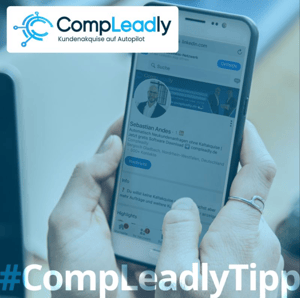
- How to do it: Here we show you what to consider for your LinkedIn profile.
- FREE: We are happy to provide you with individual and free profile feedback for your LinkedIn profile. Feel free to contact us: Support@compleadly.de
Maximize the daily use of CompLeadly functions
- Find all functions in CompLeadly and add them to the sequence
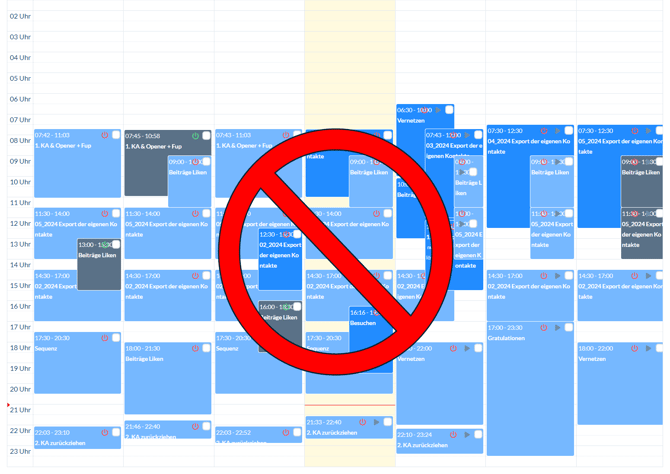
- The recommended daily usage for all functions
-%20The%20image%20should%20feature%20a%20wide%20digital%20dashboard%20i-webp.webp?width=670&height=383&name=DALL%C2%B7E%202024-06-07%2011-06-26%20-%20An%20image%20focused%20on%20numerical%20data%20and%20metrics%20with%20LinkedIn%20color%20themes%20(blue%2c%20white%2c%20and%20gray)-%20The%20image%20should%20feature%20a%20wide%20digital%20dashboard%20i-webp.webp)
Run CompLeadly for up to 16 hours a day
 To get the most out of your LinkedIn activities, it's crucial to use CompLeadly for as long as possible each day. Make sure to run the tool for up to 16 hours daily. This way, you remain constantly present and memorable to your target audience. This activity ensures that potential clients are continuously exposed to your business, significantly increasing the likelihood of successful contact.
Your acceptance rate should be > 20%

are targeting the right audience. If the rate is lower, you should reconsider and adjust your target audience to ensure you are reaching the right people.
Increase response rates through follow-ups, likes, and skill endorsements
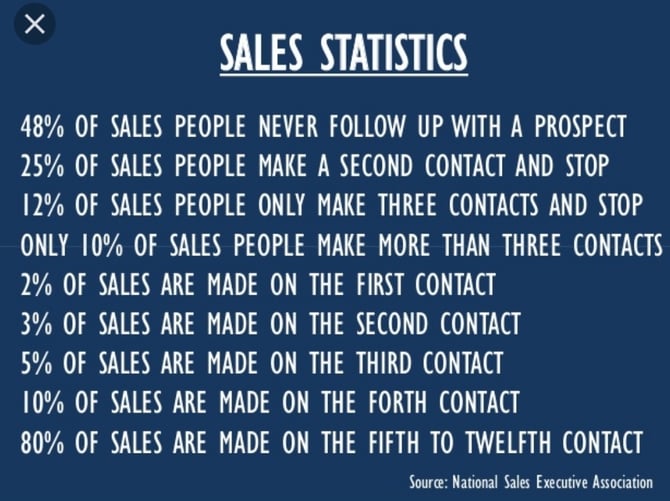
- Follow-ups are essential for any sales process, and here’s why. According to statistics, just by doing 3 follow-ups, you are already 90% better than those who don't.
Is your text relevant?

If you are not achieving sufficient results, review your messages. Ensure they are personalized and relevant to your target audience. Sometimes, a small adjustment can significantly increase engagement.
Do you know Jordan Belfort, now a sales coach and famous from the film "Wolf of Wall Street"? Here you can find his approach to selling.
➔ Which texts to use for sales
Don’t overdo split testing
If you want to test multiple target groups, texts, and sequences, conduct split testing with one target group over a period of 7 days to cover every day of the week. Don’t test too many target groups and texts simultaneously, as this can lead to unclear results. Focus on a handful of variations to obtain clear and meaningful data.

Handle objections and excuses
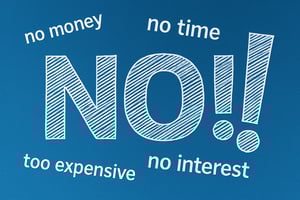 Be prepared to handle objections and excuses from your potential clients. Develop strategies, for example, using our guidelines HERE, to confidently address common objections and use excuses as opportunities for clarification and persuasion. Mastering these techniques can make a crucial difference in your client acquisition.
The foundation for your sales success: Your positioning in the market

Here are some key aspects of positioning:
- Unique Selling Proposition (USP): Define your unique selling proposition that sets you apart from others. What do you offer that no one else does in the same way? This could be a specific product feature, a special service, or an exceptional customer experience. It must be plausible and explainable.
Simply saying you are the best, that you go the extra mile, or have special certifications rarely helps. Customers expect that!- Product feature: If your product has a function that no other product on the market offers. Example: A software tool that provides specific automation others don't have.
- Example: CompLeadly can write gender-specific messages and congratulate on birthdays.
- Special service: A service that only you offer or implement in a unique way.
- Example: An IT service provider that offers 24/7 live support and guaranteed response times under 5 minutes.
- Exceptional customer experience: An experience or service that exceeds customer expectations.
- Example: A travel agency that creates tailor-made travel plans and provides personal travel advisors available around the clock.
- Product feature: If your product has a function that no other product on the market offers. Example: A software tool that provides specific automation others don't have.
- Understanding your target audience: Know your target audience well. What needs and problems do they have that you can solve? The better you understand your target audience, the more targeted you can make your offer and messages.
- Clarity and consistency: Communicate your positioning clearly and consistently in all your LinkedIn activities. Your profile, messages, and posts should all convey a unified image.
- Value proposition: Emphasize the concrete benefits your clients gain from your service or product. How do you improve your clients' lives or work? Show this with examples and success stories. Referrals and customer reviews support your capability and build trust.
- Competitive analysis: Know your competitors and position yourself strategically against them. What do they do well, and what can you do better? Highlight your strengths and advantages over your competitors' offerings without focusing too much on them.
Build trust
When someone doesn't buy from you, it's due to a lack of trust, meaning the customer is unsure if you can help with their problems.
The customer might have had bad experiences or already wasted money.
-
Credibility and Competence
Trust signals that you are competent and reliable. When you demonstrate your expertise and appear credible, customers feel more confident in their decision. They are more likely to buy from someone who appears to be an expert and whom they trust.
You achieve this by understanding and addressing the customers' pains and challenges. -
Positive Experiences and Testimonials
Customers who hear about positive experiences from others are more likely to make a purchase. Trust can be strengthened through customer reviews, testimonials, and case studies that show others are satisfied with your product or service. -
Reducing Perceived Risk
The higher the trust, the lower the perceived risk for the customer. This means customers have fewer concerns about making a bad purchase. They know they can count on you if there are problems and that you stand behind your product.
No liability can be assumed for completeness, editorial and technical errors, omissions, etc., or for the accuracy of the information provided.