Table of Contents
- Introduction
- Acceptance Rate: What Does a Good Rate Mean?
- The Effect of Messages in Connection Requests
- What LinkedIn Recommends Adding a Message
- Practical Recommendation
- Conclusion
1. Introduction
When sending connection requests on LinkedIn, the question often arises whether a short message should be included or not. Both options are valid – and depending on your objective, target audience, and tone, the impact can vary. This article helps you make an informed decision.
2. Acceptance Rate: What Does a Good Rate Mean?
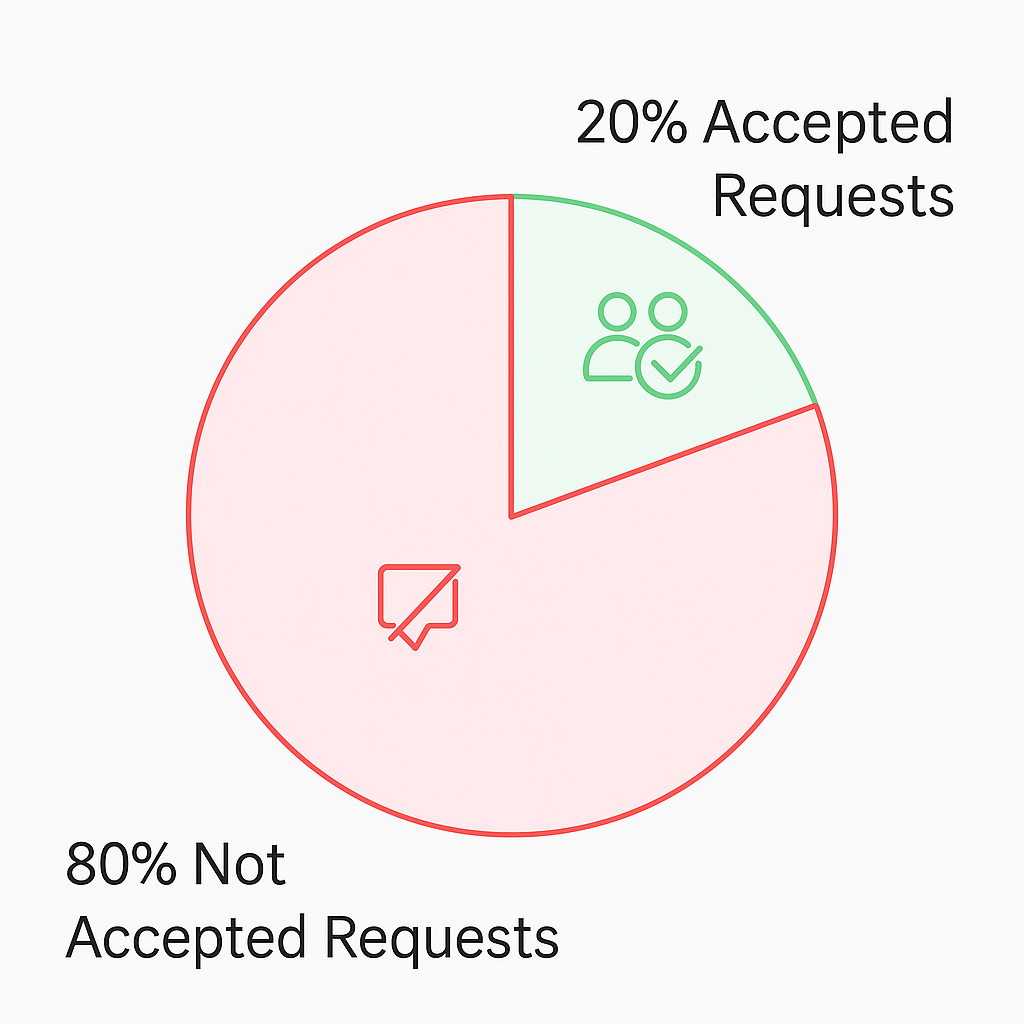
Many users are satisfied when about 20% of their requests are accepted. That means: one in five people clicks “Accept.” At the same time, it also means that four out of five people either don’t respond or decline.
An acceptance rate of 20% is okay – but there’s room for improvement.
3. The Effect of Messages in Connection Requests
Experience shows that requests without a message often achieve higher acceptance rates. The reason: a blank request comes across as more neutral and harmless. Many LinkedIn users are skeptical of connection requests that already sound like a sales pitch in the first sentence.
While a message might get you a 20% acceptance rate, the rate without a message can climb to over 30% – simply because the request doesn’t feel like a sales attempt.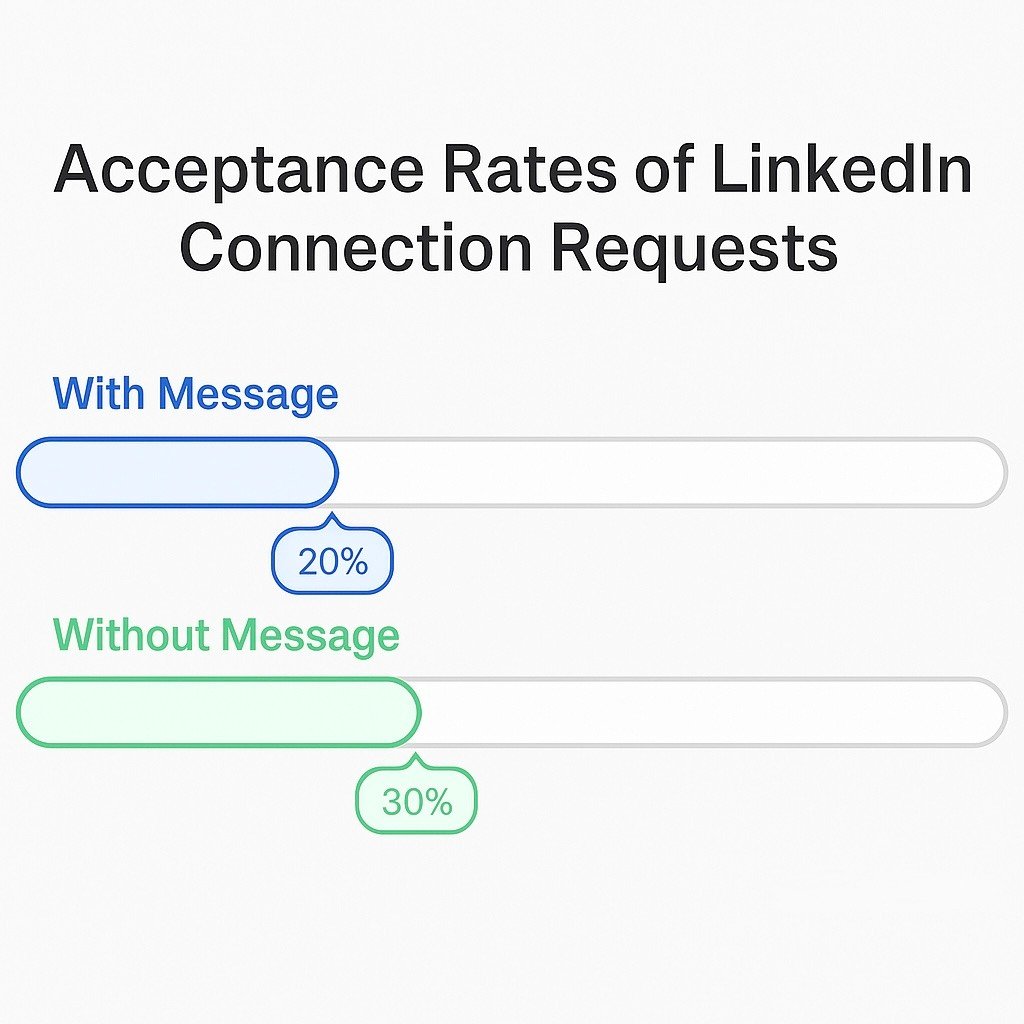
4. What LinkedIn Recommends Adding a Message
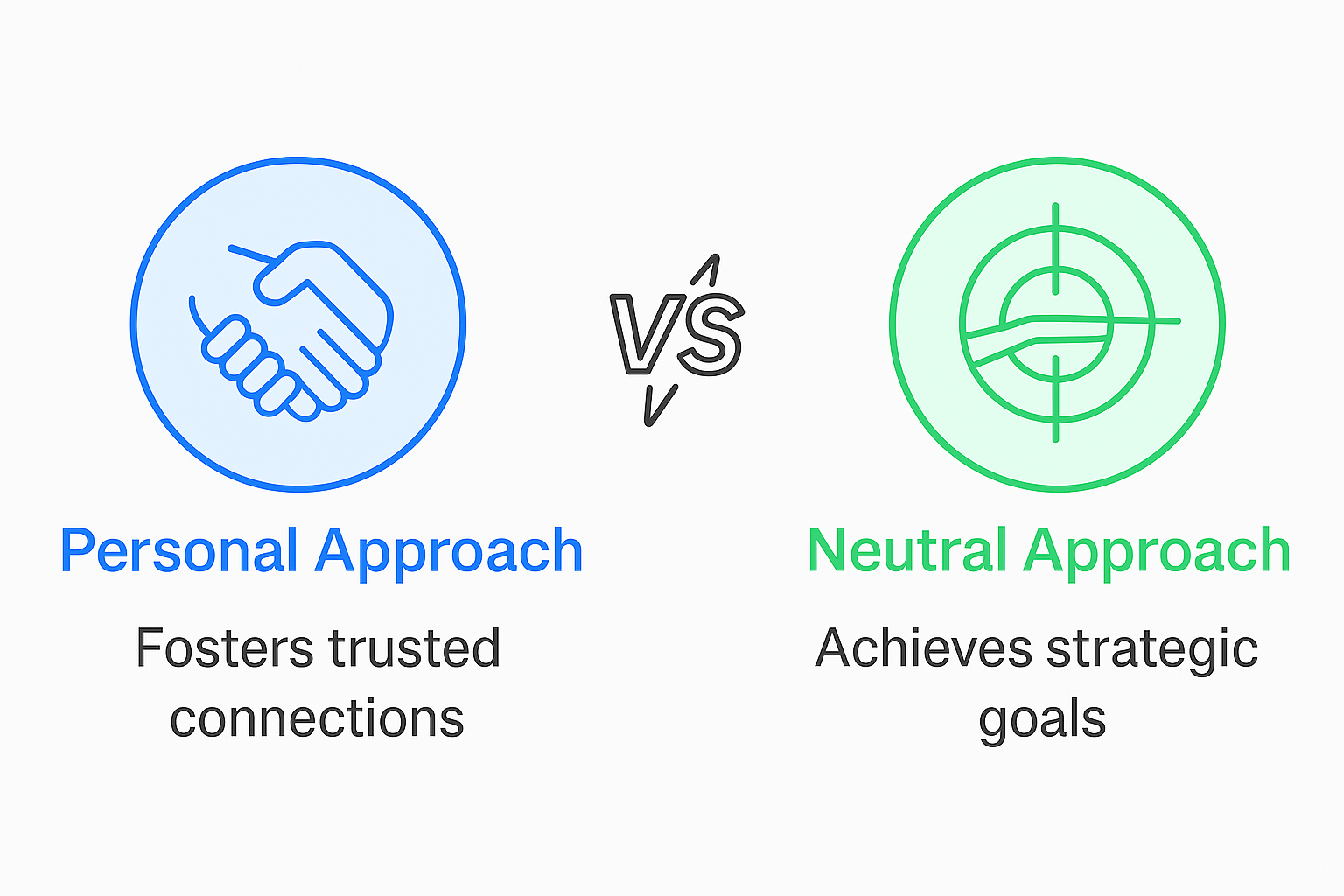
LinkedIn itself recommends adding a short text. This is because LinkedIn assumes that you primarily connect with people you already know – like colleagues, acquaintances, or business partners.
In such cases, a short personal note like “We met at Expo XYZ” makes sense.
However, if you’re strategically connecting with new people from your target audience – for example, as part of social selling or lead generation – a neutral, message-free approach is often more effective.
5. Practical Recommendation
If you want to systematically build new contacts and focus on reach, number of connections, and conversions, it’s worth testing blank requests.
One approach is to try both variants in parallel for a few days – e.g., 25 with and 25 without a message – and then compare the acceptance rate.
This gives you a solid basis for decision-making, based on your own audience.
6. Conclusion
Whether you add a message to the request or not depends heavily on your goal and your audience. If you want to build many new connections without immediately starting a conversation, the version without a message is often the better choice.
Testing is worth it – as a clear difference in results often becomes apparent after just a short time.